UPCOMING EVENTS
CURRENT PUBLICATIONS
The current issue of PoultryTech - Fall 2012 is
online.
To receiveyour free subscription to the PoultryTech newsletter, simply complete the short form at http://www.atrp.gatech.edu/subscribe.html. It’s that easy!
As a PoultryTech subscriber, you will receive two printed issues mailed directly to you in the Spring and Fall and one electronic issue sent to your email address each Summer.
Your information will remain confidential, and we will only send you the newsletter, research updates and event invitations with your permission. You can unsubscribe any time.
NEW - PoultryTech - Fall 2012
ATRP 2011 Annual Report
ATRP Program Brochure
SPECIAL INTEREST
Follow ATRP on Facebook
GTRI’s Agricultural Technology Research Program (ATRP) is now on Facebook, featuring information about exciting research initiatives underway, interesting poultry and food industry news, industry events, photos, videos, and more! We invite you to become a fan by clicking the “like” button on our page — www.facebook.com/ATRP.GTRI
Technical Assistance Is Just a Phone Call Away
The Agricultural Technology Research Program (ATRP) provides no-cost technical assistance to Georgia-based firms and individuals in the poultry industry. These assists include simple inquiries regarding information or help needed to address a problem and extensive on-site consultations in which researchers collect data and provide a full report on their findings and recommendations. The technical assistance program also offers in-plant energy assessments designed to help companies identify strategies of reducing energy usage and costs. Recently, the program was extended to include workplace safety consultations, specifically those focused on ergonomics and cumulative trauma disorders. ATRP uses input from all assists to gauge situations calling for new research initiatives in energy, environmental, safety, and other areas.
To inquire about the program or to schedule an assist:
Doug Britton at (404) 407-8829 or email doug.britton@gtri.gatech.edu.
Georgia Tech's Food Processing
Technology Building
View the Food
Processing Technology Building brochure
Directions to the Food
Processing Technology Building >> |
RESEARCH FOCUS
The Agricultural Technology Research Program (ATRP) at the Georgia Tech Research Institute (GTRI) and U.S. Poultry & Egg Association (USPOULTRY) are excited to announce a new partnership for jointly hosting the National Safety Conference for the Poultry Industry, with additional support provided by the Georgia Poultry Federation, the National Chicken Council, and the National Turkey Federation – who, along with GTRI, were founding sponsors of the conference. This year’s conference will take place August 19 - 21, at the Omni Amelia Island Plantation on Amelia Island, Florida.
Read More >
A Message from Doug Britton, ATRP Program Manager
After wrapping up another successful Poultry World exhibit at the Georgia National Fair (www.georgianationalfair.com), I am reminded how fortunate we are to work with such a great group of industry and academic volunteers. More than 160 individuals from 22 different organizations and facilities volunteered to staff the exhibit during the 10 days of the fair. This often involved answering a wide range of questions and explaining the important role that the poultry industry plays in providing a wholesome food supply to the world, while serving as an economic engine here in the State of Georgia.
Read More >
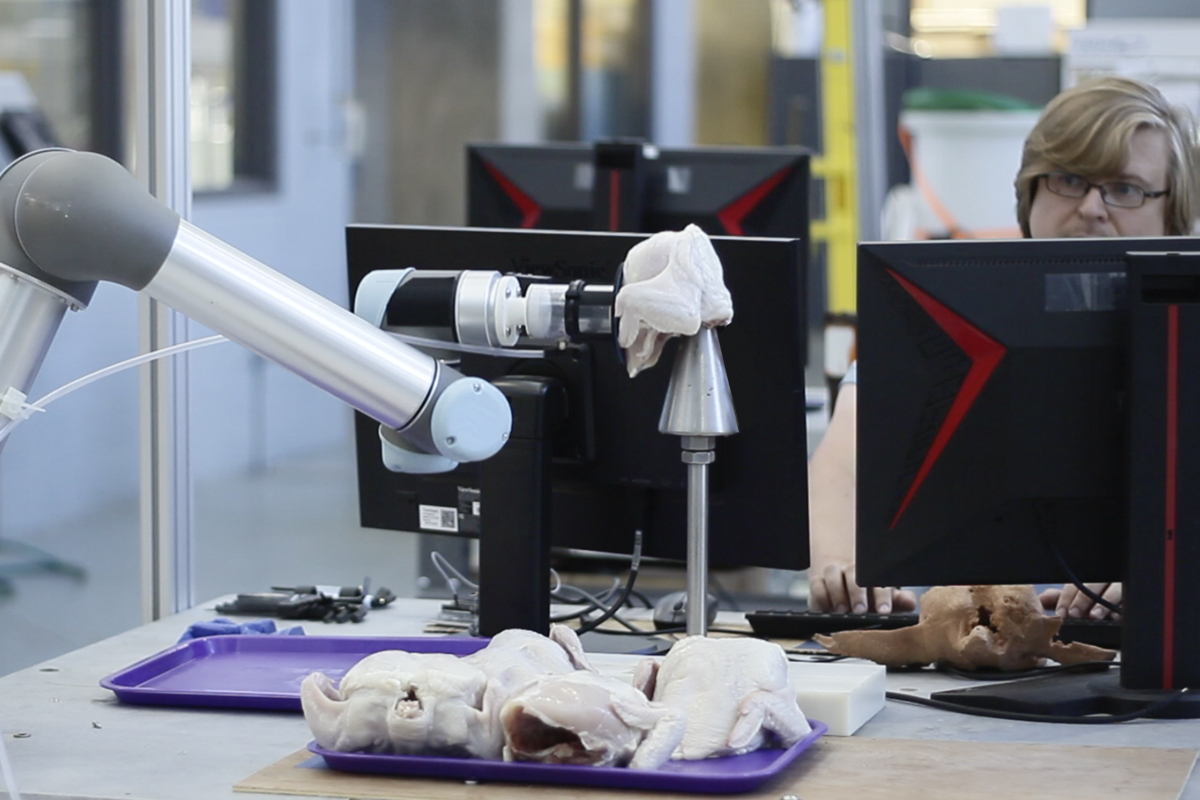
Researchers with the Georgia Tech Research Institute (GTRI) have developed an automated vision system for estimating yield loss by correlating image characteristics with the amount of meat left
on a frame. Employing a special illuminated cone and sophisticated software algorithms, the Cone Line Screening System can make yield measurements in under a second and has at least a 90-percent
correlation with yield measurements performed manually.
Read More >
RESEARCH NEWS
By Nicole Dyer, Popular Science
If you’ve ever wondered how boneless chicken parts end up that way, take a peek inside one of the 4,000 or so poultry processing plants in the U.S. Workers man massive assembly lines to scald, pluck, gut, slice, and wrap an estimated nine billion birds annually.
Read More >
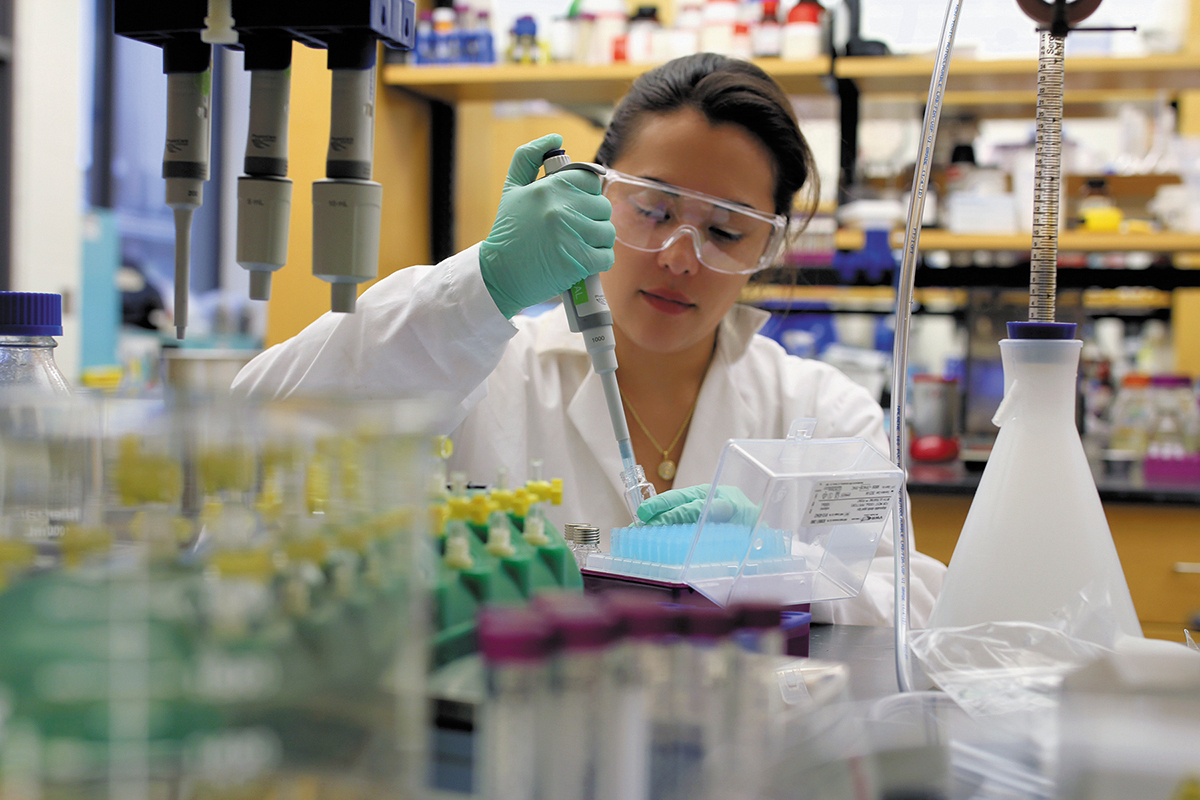
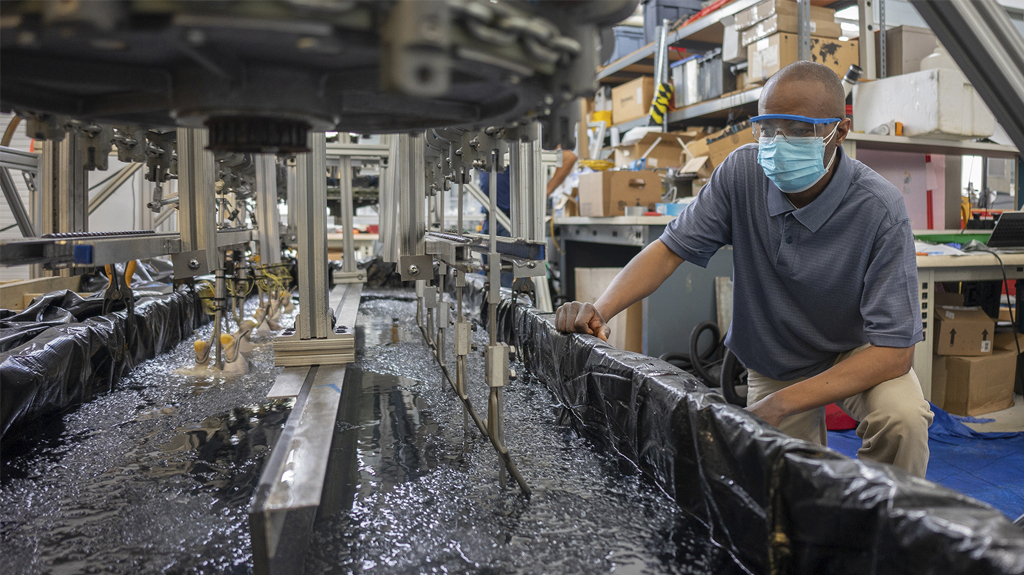
Improved primary screening of poultry wastewater offers ample opportunity for reducing overall wastewater costs. Similar to in-plant practices (such as dry sweeping) that are designed to keep material out of the drain, screening is a physical process with the goal of getting gross solids out of the liquid stream discharged from the processing plant to wastewater. If successful, a smaller range of particle sizes can then be removed by follow-on processes such as chemically enhanced dissolved air flotation or biological processes.
Read More >
Written by Sim Harbert and Linda Harley
The Georgia Tech Research Institute’s Food Processing Technology Division (FPTD) demonstrated in a proof-of-concept study that it is feasible to use Wiimotes as sensors to collect motion data from participants performing a simulated poultry plant lifting task. Wiimotes contain solid state accelerometers and rate gyros that are transmitted wirelessly to provide translation and rotation information. Currently, FPTD is developing MiMiC (Mobile Motion Capture), a smartphone application that wirelessly collects and stores movement data from kinematic modules that contain sensors similar to Wiimotes. This system will initially collect data from modules made by the Shimmer Corporation that relay accelerometer, rate gyro, and magnetic compass data over Bluetooth. The modules are housed in a small, lightweight enclosure.
Read More >
Written by J. Michael Matthews
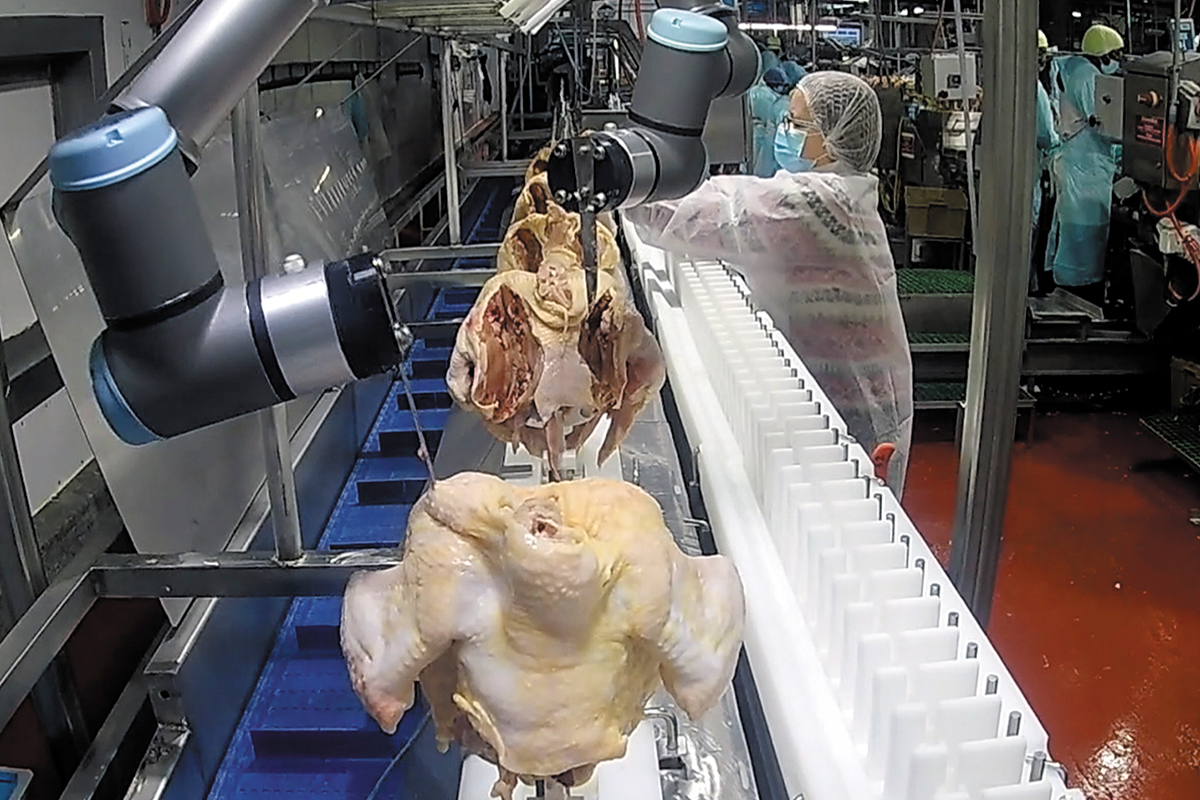
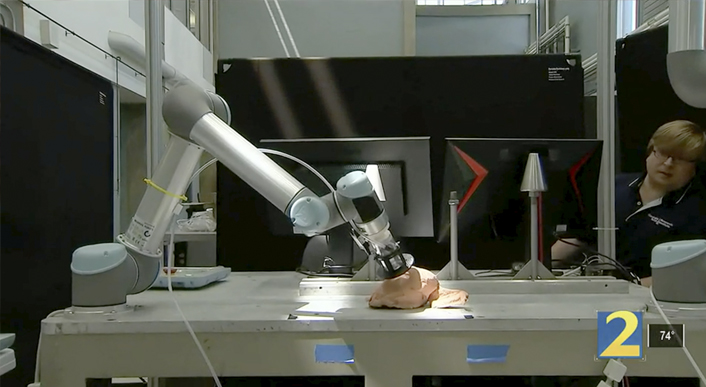
The poultry industry relies heavily on fixed automation as well as specialized robotics and perception techniques, implemented in a step-by-step “perception then manipulation” process. For many tasks, especially those involving rigid materials (package sorting and stacking) or static objects (chicken breast water jet portioning) this works well and is very efficient. However, for tasks that involve deformable product that must be manipulated (gripped, pulled, flipped, cut, etc.), this fixed “perception then manipulation” process is no longer valid. This is because the manipulation itself changes the object in real-time, invalidating prior perception measurements.
Read More >
Written by Ashley B. Peterson, Ph.D., vice president of Science and Technology for the National Chicken Council.
The proposed Modernization of Poultry Inspection rule published in January 2012 provides many unique challenges and opportunities for the chicken industry. The industry is committed to ensuring a safe, wholesome, and abundant supply of poultry products for both domestic and international markets, and the poultry slaughter inspection system plays an important role in this process. The chicken industry supports a science-based, statistically validated, establishment-oriented approach to food safety and poultry slaughter inspection.
Read More >
Written by Ai-Ping Hu, Ph.D.
Although plants are increasingly automated, in the food processing industry there remain many manual operations that require expert knowledge to function efficiently and cost-effectively. As previously reported (www.atrp.gatech.edu/PT_23_3/23-3_p3.html), the goal of this project is to encode this knowledge so it may be effectively taught to a robot.
Researchers are considering bird re-hang as an initial expert knowledge problem. In the re-hang task, the worker grasps the bird by the breast (usually from an unstructured pile), lifts it, and then “flicks” the bird such that its legs are each directed into a pair of moving shackles. A motion capture system is needed to quantify the kinematics and dynamics of the manual operation. The project team has implemented a motion capture capability using the Microsoft Kinect (to obtain both kinematic and dynamics data).
Read More >
|